Diamonds

Color Options For Diamond Engagement Rings
white diamond engagement ring

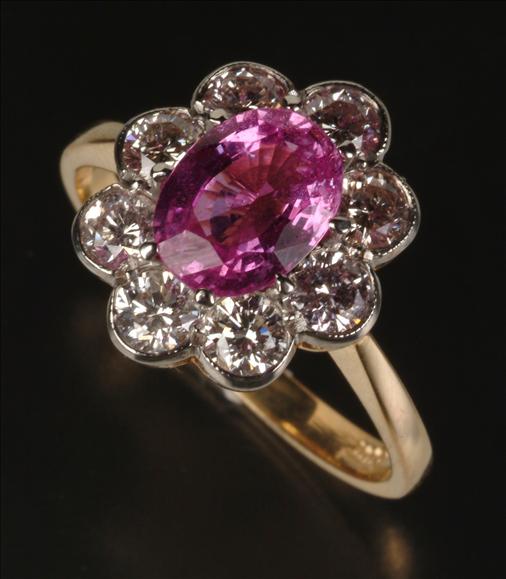
Diamond rings are the first choice for any engagement, but even for something as traditional as a marriage proposal, some pay attention to…fashion trends. If we take a look at famous engagement rings some of the most talked about celebrities in Hollywood showed off, we can easily notice one significant trend: no one wants colorless diamonds anymore. Fancy colored diamonds are the latest rage in fashion and have become some of the most sought out jewelry item over the last years. Kristen Bell received a beautiful champagne colored diamond from Dax Sheperd, Olivia Palermo has a canary-yellow sparkler on her hand and “Gossip Girl” Blake Lively was proposed to with a pink diamond ring by Ryan Reynolds.

Fancy diamonds is a term used for diamonds hued in very bold shades, which makes them unusual and present the perfect opportunity to stand out. And what else does a Hollywood diva want rather then not being just another girl in the crowd? Fancy diamonds are rare, although stones treated in a laboratory are also valuable. However, the really expensive diamonds are those who are naturally colored, without any chemical addition. Natural coloring occurs when an impurity gets trapped inside the diamond’s carbon lattice structure. For instance, yellow diamonds have their coloring from nitrogen, while blue diamonds have this interesting hue due to traces of boron.

Speaking of popularity, fancy diamonds are not an invention of the last decade, because many celebrities and famous people used to offer lavished gifts in the form of colored diamonds to their loved ones. The most popular diamond hue is certainly yellow. Over the years, yellow diamonds became the quintessential expression of elegance and opulence. Someone who wears yellow diamonds is trying to make a statement, to get noticed. When Paris Hilton was engaged to billionaire Paris Latsis (let’s not get into the whole Paris and Paris subject), the heiress got not one, but two engagement rings, one of them being a canary diamond ring, worth $5 million. After Jennifer Lopez gave birth to their twins, husband Marc Anthony gave her an 8 carat canary yellow diamond ring as a present. Another famous yellow diamond engagement ring was the one received by Katie Holmes from Tom Cruise. And let’s not forget the famous 1953 movie premiere where Marilyn Monroe wore a yellow pear-shaped diamond, called The Moon of Baroda, which was also used for a promotional photo shoot.

Those who want a more feminine and delicate choice as an engagement ring, opt for pink diamonds. Most women love pink diamonds because it’s the one color you don’t see men wearing that often. We all remember the famous pink diamond engagement ring given to Jennifer Lopez by her then fiancé Ben Affleck.  Another diva who has a passion for pink diamonds is Mariah Carey. When she got engaged to Nick Canon, she received a beautiful emerald cut pink diamond engagement ring. A pink diamond was also the stone of choice for Enrique Iglesias when he proposed to long time girlfriend Anna Kournikova.

One of the hardest diamonds to find is a naturally colored blue diamond. Blue diamonds are so rare, but so worth it, considering how blue is the color of royalty and nobility. Strangely enough, not many celebrities opt for blue diamonds, but somehow they did gain in popularity over the last years, replacing sapphires.

No matter the shape, size or color, engagement rings are special and should be treated accordingly. If you’re in need for a ring appraisal, or if you want to insure your diamond engagement ring, don’t hesitate to contact us and we’ll provide you with all the information you need. Our services are certified and professional, so you can be assured you’re receiving high quality and detailed appraisals.

Image courtesy of Boykung at FreeDigitalPhotos.net
Why You Shouldn’t Waste Time Thinking About Diamonds

blue diamond

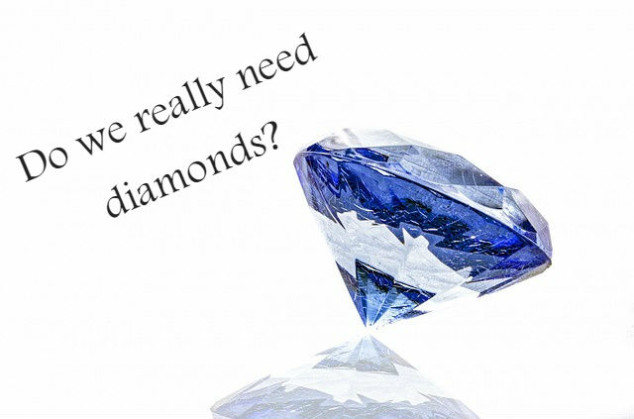
A couple of years ago, Ira Weissman, one of the veterans in the diamond industry seriously stirred the waters when he published his article “7 Reasons Why Diamonds Are A Waste Of Money” for Huffington Post. Quickly, a debate started and there were various experts defending the diamond industry, but also plenty others who agreed with Weissman’s ideas.

Although he wasn’t the first one to state this idea, his piece really started somewhat of a mini-revolution among Internet users and the article has become the main motivation for many young couples not to splurge for a diamond engagement ring.

Fact is diamonds are part of our life, whether we like it or not, because these precious gemstones were used for decorative purposes since ancient times. Early references to diamonds come from India in Sanskrit texts. Due to their qualities and because they were rare gemstones, diamonds quickly became a trade item in many cultures. However, diamonds are not meant to symbolize only the social status or wealth. They are symbols of love, purity, power, strength and beauty. Diamonds are rare, beautiful, can’t be easily cut and are impervious to fire, so it’s no wonder ancient Greeks thought they were tears of Gods fallen on earth and ancient Romans believed diamonds were splinters of fallen stars. As a matter of fact, the Romans far not that far away in their assumption, as a recently discovered white dwarf star is made entirely out of diamond.

But let’s not get ahead of ourselves, and let’s get back to Weissman’s article and answer the stringent question: “Are diamonds really a waste of money?”

First, Weissman states diamond engagement rings are just a marketing product of the 20th century. That’s only partially true, because that’s when they became more popular, but engagement rings were not that uncommon starting with the Industrial Revolution, when diamonds began to be sold even by department stores because new diamond mines were found, and they weren’t reserved only for the upper class and those who were wealthy enough to afford them. Noblemen and royals used to offer diamond rings as gifts for centuries. The first diamond engagement ring in the history, is the one received by Mary of Burgundy in 1477. So no, it’s not a new tradition made by marketing agencies, it’s just that diamond rings were not that popular before De Beers and their ad campaign. It’s the same as Santa Claus. Just because Coca-Cola put an old man in a red suit, it doesn’t mean people didn’t have this tradition under different names and meanings for each culture.

Another idea stated in the article is that diamonds are not a real investment because you can’t sell them for exactly the same price. Yes, that may be true if you want to sell your diamonds after a couple of years, but diamonds, and jewelry in particular is always going to be valuable and that’s why jewelry is inherited by children, grandchildren or other family members. So if you were to inherit your grandmother’s diamond ring, you could keep is as a cherished memory or you could sell it for a good amount of money and use it however you want. So no, you don’t get rich by buying and selling diamonds, but the gemstones are still worth a lot of money if you were to sell them.

Spotting fake diamonds is tricky, and yes, many online dealers and even brick and mortar dealers are trying to scam their customers, but now a days, there are so many technological processes used to establish the real value of a diamond, that it’s practically impossible to get scammed. Just make sure you don’t buy anything without getting an expert opinion, best from an independent appraiser, who has no interest in telling you a diamond is worth more or less and will only give you the true facts.

Another controversy related to diamond rings is how much you spend for them. This is a very subjective matter, as for  each individual money has different values. Some prefer to spend it on necessities and save the rest, while other believe you only have one life and you should really enjoy it. When it comes to diamond engagement rings, no woman will tell you a diamond is the only sign of a man’s love and many brides don’t want a diamond. That’s absolutely natural, everyone’s entitled to make their own choices, but fore many brides, a diamond engagement ring is their most precious possession. Some users form the weddingbee.com boards explain it best:

“I wish I could say that I’d be fine with whatever, but honestly I wanted a real one. Its the only “real” piece of jewelry I own and its important to me. I wear it everyday though and I plan to wear it everyday for the rest of my life so I wanted it to be special. To me having the real thing was worth it. ( board user: Mrs.PinkPeony)”

“My husband was able to afford a nice ring and I love it. If we’d been in a different financial situation at the time he got the ring, he probably would’ve purchased a smaller diamond, but still a real one. (board user: QueenBecca037)”

“I would care. I hate saying it, but it’s true.

I got a real diamond, but it’s small. Having a real diamond was important to me because the thought of having a “fake” diamond symbolizing our engagement just didn’t sit well with me. I know, it makes no sense because a diamond doesn’t determine the status of your relationship, but that’s just how I feel (board user: Miss Chapstick)”

On the board, there are plenty of brides who don’t specifically want a diamond engagement ring, but for some, the ring symbolizes something and it was well worth spending the money for it.

Other arguments presented by Weissman in his article or not even convincing enough, he just basically says you don’t need a diamond to prove your love. Yes, that is completely true, but that’s not why people buy diamond engagement rings. Let’s admit it, if someone were to do that, the relationship is doomed from the start. But diamonds are a traditional symbol, whether we like it or not. Diamond jewelry is also practical. Usually the engagement ring is worn for any occasion, every day. Diamonds, unlike other gemstones “go with everything”, so many women like the fact they don’t have the hassle of accessorizing diamond jewelry according to outfits, occasions or events.

Bottom line is diamonds are not a waste if it’s something you really want, just like the latest iPhone is not a waste for those who love the brand and are crazy about these gadgets. Diamond engagement rings are just a choice like any other made in life and no one should be influenced by what the media or anyone else for that matter says about it.

Photo credit: Pixabay.com, user: PublicDomainPictures

Fall/Winter 2014 Diamond Jewelry Trends

heart shaped jewelry

After a busy season in New York with the NY Fashion Week, it’s officially time to discuss major trends in fashion, makeup, hair styles and jewelry for the upcomming season. Not only fashion designers present their collections each season, but jewelry designers too. We’ve gathered a short list of the upcoming trends in diamond jewelry, in case you want to add some new pieces to your collection.

Big & Bold Jewels

This year,designers decided that bigger is better, for clothes, hair and accessories. Perhaps the 80s are going to be revived next year, as this year was all about the 90s. Not only fashion jewelry consisted out of statement pieces,  so the preferred metal for this season is still gold. Rose gold and white gold are going strong, but yellow gold jewelry gains more and more in popularity, probably because it goes so well with festive outfits.

Necklaces, bracelets, earrings and rings, you name it, everything is big this season. The best part is, now you can take out again those diamond drop earrings you’ve been saving for special occasions.

Floral Designs

Especially for rings, many jewels created for this season were based on a flora design. Different versions of gold and diamond rings in flower shape were showcased by various jewelry houses.

Love Is In The Air

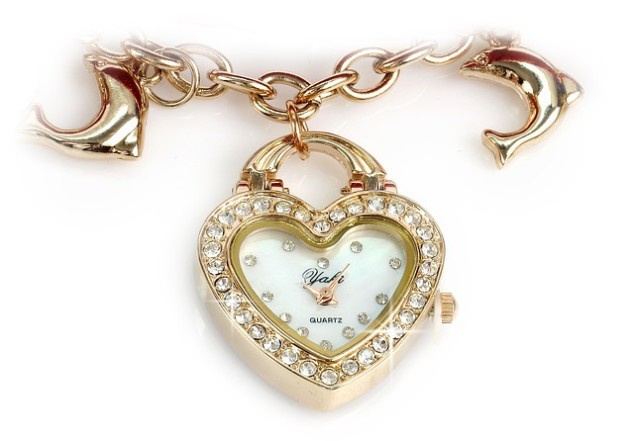
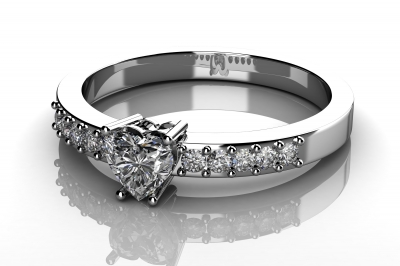
Although Valentine’s Day is till far away, heart shaped jewelry is another trend to watch for. Gold and diamond heart pendants will be the most sought out gift for this winter and even for the 2015 spring season.

Small Stones

There is an alternative to big, chunky jewelry, and that is choosing quite the opposite, delicate and feminine pieces. Small diamonds are added into complex designs of gold jewelry, for that extra “sparkle” factor. Bracelets laced with radiant diamonds, or embellished necklaces are the best accessories for a stylish outfit.

Vintage Style

For those who don’t want to give up on their vintage jewelry (or jewelry that at least seems to be vintage), don’t worry. The vintage trends is probably never going to disappear. Pearl and diamond stud earrings, or diamonds in combination with cushion cut gemstones are glamorous and chic. The same goes for rings too, as vintage style rings never go out of fashion.

Bridal Trends

One of the most interesting trends each season is the one regarding bridal fashion. Who knows how many couples are planning on purchasing the engagement ring in the next couple of months, so it’s no wonder the brides-to-be are eagerly browsing magazines and websites to see what style their engagement ring should have. For the 2014 – 2015 season, the main trends in engagement rings are the following:

-          Cushion cut diamonds, as an alternative to the classic round cut. The diamond still maintains its brilliance, but this cut also adds some extra elegance to it.

-          Eternity bands as engagement rings. Eternity bands are not only for anniversaries, as more and more people choose this ring style for engagement rings. This is a style suitable for those who want to keep it subtle, because in eternity bands diamonds don’t have to be “the bigger, the better”.

-          Small settings. This is another alternative for those who want an engagement ring that’s not too flashy. This type of setting looks great with a solitary diamond.

-          Rose gold. This metal was widely used for all types of jewels, but not so much for engagement rings. Brides seem to prefer it because it complements the skin tone better than yellow gold or silvery-white metals like white gold or platinum.

If some of these trends seem appealing to you, and you want to purchase a new diamond jewel, don’t hesitate to contact AGI New York, to find out how much a certain diamond is worth.

Photo: Pixabay.com, user: lulek41

The History And Connection Between Diamonds And Engagement Rings

diamond engagement ring history

Engagement rings are common now a days, offering such a special ring is considered to be one of the biggest and most awaited steps in a relationship. In fact, the custom of offering engagement rings is older than you might think, the only difference is diamonds were not the top choice gemstone for this matter.

History of Engagement Rings

Engagement ring history starts from  2nd century  BC, Pliny the Elder notes in his writings that it is custom for the Roman groom to give the bride a gold ring, to be worn at the marriage ceremony and at special events and and iron ring to wear at home. Rings didn’t have a romantic connotation back then, as they were symbols for a woman belonging to a man.

Meanwhile, in Asia, a hundred years later, sultans  and sheiks use puzzle rings to “tag” each of their wives. Just imagine, how many rings a sultan had to buy…

Engagement rings became more and more important over the years, but sadly, just for the women, as it was common practice in Medieval England for men to give girls rings made of rush. Of course, they wouldn’t marry them afterwards, and that’s why the bishop of Salisbury puts an end to this practice by declaring a marriage made with a rush ring as legally-binding.

One of the first recorded uses of a diamond engagement ring dates from 1477, when the Archduke Maximilian of Austria proposes to Mary of Burgundy with a personalized diamond ring. Thin, flat, diamond pieces were set in the shape of the letter M. 2 years earlier, Constanzo Sforza gave his bride, Camilla d’Aragona a diamond ring on their wedding day. Naturally, only royalties and wealthy noblemen were able to afford the luxury of giving diamond rings as engagement presents.

During the Renaissance, engagement rings are becoming more and more important and their design is also part of their charm, aside from the gemstones. Twin rings were very popular back then, as they were composed of two hoops that slid open to reveal love emblems and inscriptions. Twin rings evolved into faith rings, in which two clasped hands holding a diamond heart represented the unity of love. This romantic purpose of engagement rings was something rather common in Europe, but not across the Atlantic Ocean. Puritans gave their wives useful thimbles instead of rings, but the wives had something else in mind and they cut off the thimbles’ tops and wore them as rings anyway.

After the 17th century, there was again a shift to the gemstones as opposed to the setting for engagement rings, and diamonds were a more and more popular choice, as new gemstones were found during minings in South America.

Queen Victoria played an important part in the popularization of diamonds, as she had a real passion for sentimental jewels. She received an enamel band set with a single diamond as a gift of love from Albert and even her engagement ring was a serpent, ,the ancient symbol of protection and eternity. Victorians often used to make jewelry out of flocks of human hair (usually form beloved ones) and gemstones to spell out names or terms of endearment.

After the discovery of diamonds in South Africa in 1867, there was a sudden increase in diamond supply, and this lead to even more diamond jewelry and engagement rings, from here starts the history of diamond engagement rings .Cutting techniques allowed diamonds to look perfect and shine brightly in necklaces, bracelets, tiaras and rings. Tiffany & Co. introduces in 1886 the Tiffany setting, a special setting dezigned to maximizie the brilliance and the quality of a diamond. Up to now a days, Tiffany & Co. engagement rings are still the first choice for many brides-to be.

In the last decade of the 19th century, diamond rings were finally not only for the wealthiest people of the world, as they even appeared in mail-order catalogs. Of course, these were affordable, and didn’t have high quality standards, but still, brides were able to dream about having a diamond on their finger.

One of the traditional wedding rings in France, even today is the Cartier Trinity Ring, which has pink gold, white gold and yellow gold hoops intertwined.

In 1920, manufacturers and jewelers tried to sell engagement rings for men. This was a big flop, as men don’t seem to eager to wear them. Only in the 1940’s men started to wear wedding rings too, one them being famous actor Humphrey Bogart at his fifth and final wedding to actress Lauren Bacall.

By the 21st century, a more then third of couples buying diamond engagement rings are saving up at least two months’ worth of a salary to spend on them.

Engagement rings have established their position as symbols of love and faith, which gives them a sentimental value along with the financial one, and that’s why it’s important to treat them as a real investment. AGI New York provides a whole range of services, from diamond appraisals, certifications and insurance, so that our clients can benefit from diamond engagement rings on the long term. Scheduling an appointment is easy, you just need to contact us or pay us a visit and our gemologists will take care of the rest.

Photo Credit: Pixbay.com, user: BurningWell

7 Ways To Spot A Fake Diamond

how to spot a fake diamond

When it comes to jewelry, it’s always difficult to establish the true value of a piece, especially if it’s of unknown origin or you suspect it to be fake. Most fake pieces of jewelry on the market are diamonds, because these gems are so high in demand. They make the perfect gift for engagements, birthdays, anniversaries, you can basically never go wrong with diamond jewelry. However, what if some of these gifts are not diamonds at all? Before checking with an expert, you can easily spot rough imitations of real diamonds with the help of some tricks.

Here is How to Spot a Fake Diamond:

  1. The transparency test. Place your diamond on a newspaper or any piece of paper with writing on it. If you are able to read through the diamond, than it’s most likely you have  a quartz or glass diamond. Real diamonds bend light because of their high refractive index, which makes it difficult to see through them, let alone read.
  2. The fog test. Diamonds are very good heat dispersers. If you hold a diamond to your mouth and blow on it, like you would when cleaning a mirror or a glass surface, a real diamond should evaporate the fog instantly. If it stays on the diamond for more than 3 or 4 seconds, you’re probably dealing with a fake.
  3. The weight test. If you own a carat or a gram scale, check the weight of your diamond. Fake ones usually weight 50-60% more than real diamonds of the same size.
  4. The sparkle test. Look very closely at your diamond’s sparkle. If you see many rainbow reflections, as beautiful as they may seem, they’re a sign of a low quality diamond or even a fake.
  5. The light test. This test can be made only if you have UV light or Black light at hand. The diamond should be placed under UV light or Black light in a dark room. If it has a blue, fluorescent glow, than it’s a real diamond. The absence of blue glow doesn’t necessarily mean it’s a fake, it could mean you have a high quality diamond. Green, yellow or grey fluorescence under UV light are common mostly for fake diamonds.
  6. The flaw test. Even though they are so expensive, diamonds are not flawless. They have tiny cracks, pinpoints or traces of carbon, called inclusions. These tiny flaws can affect the clarity of the diamond. Check with a magnified glass for inclusions and if you can’t spot any, there are two possibilities: you either have a very rare and expensive diamond that scores high on the clarity chart, or you have a fake.
  7. The metal test. As diamonds are expensive, they are usually set in precious metals, such as Palladium, Platinum, Gold or Silver. Check the jewelry for a hallmark. If  the hallmark has a (CZ) on the stamp, than your diamond is a fake, because it stands for “cubic zirconia”.

Keep in mind all these little tests don’t guarantee you accurate results, they might just help you spot really bad diamond fakes. There are so many great imitations out there, that you simply have to request professional help and get your diamonds appraised by a certified gemological laboratory. Not only will you be ensured about the quality of your diamonds, but they will be authenticated and certified. Even more, you can get insurance for your diamonds, as you would for your house or your car.

The Accredited Gemological Institute AGI New York, provides all the services above, and much more. Visit us and find out more abut our services.

Photo credit: PublicDomainPictures.net

How to Clean Diamond Jewelry

how to clean diamond jewelry

Diamond is the hardest substance found on earth and it also has the tendency to attract grime and dirt. Whether your diamond jewelry is brand new or old, you will want to keep it sparkling for many more years to come. With continuous usage of diamond jewelry, the gems will start losing its shine. This especially happens in the case of diamond rings. Products like lotions and creams along with other grime can create a thick layer of dirt on your precious jewelry which blocks the light and as a result the diamonds becomes lifeless and dull.


You must know How to Clean a Diamond? and How to Clean Diamond Jewelry? The good news is, with a few cleaning tips; you can make your diamond sparkle as good as new.


Ways to Clean Diamonds

Diamonds lose their brilliance with everyday dust and with the usage of soaps, powders, lotions and creams. Additionally, the chemicals present in the air result in the discoloration and oxidization of the diamond’s mountings. Here are a few ways to clean your diamonds and retain the beauty and sparkle of your precious jewelry:


1.     Detergent Bath

In a bowl filled with water, add a mild liquid detergent (without chlorine). Mix it till warm foams are formed. Use a soft brush to clean your diamonds till some lather is created around them. Wash off with warm water. Afterwards, place your jewelry on a soft towel and pat it dry.


2.     Soak in Cold Water

In a bowl, make a mixture consisting of 1 part mild liquid detergent (without chlorine) and 4 parts cold water. Place your diamond jewelry in the bowl and leave it for 10-20 minutes. Take the jewelry out of the water and using a soft brush, tap all the mounting sides. Rinse the jewelry in the same solution and pat dry with a towel.


3.     Quick-Dip Technique

Use a branded jewelry cleaner liquid to clean your diamonds. Make sure it is suitable for the types of metals and gems used in your jewelry. Dip your items in the liquid and take them out immediately. Brush the gems and the mountings with a soft brush and pat dry with a towel.


4.     Ultrasonic Technique

There are several jewelry cleaning machines available in the market today. You will be able to clean your jewelry with this machine in just a few minutes. Majority of these machines include a metal cup for filling with detergent and water. They ensure that your jewelry comes out as good as new.


Few Tips

  •  Protect your jewelry from harmful chemicals. You always protect your hands from any kind of chemicals, so why not your precious jewelry too? The chemicals can take the shine and brilliance away from your diamonds.
  • When you are doing your daily housework tasks or gardening or any other rough activity, make sure you remove any diamond jewelry you are wearing.
  • Protect your diamonds from exposure to chlorine or bleach.
  • Never clean the diamonds with your fingers as the oils in your skin will leave residue on your gemstones.
  • If you have doubts about cleaning your diamonds yourself, ask your jeweler to clean them for you. Majority of them clean the jewelry without charging anything.

What Does the Color of Diamonds Mean?

color of the diamonds

4 C’s

When experts examine diamonds, they are looking at four different aspects of the gem, called the 4 Cs. These are the color, cut, clarity, and carat of the diamond. The color of diamonds is the element that many laypeople simply do not understand, especially since many people who are looking at two diamonds might not be able to pick up the subtle color differences that an expert can see. The colorless diamonds, also called white diamonds, actually have varying levels of color in them. Diamonds that have a yellowish or brownish tinge to them are not as valuable as the diamonds that are truly clear and colorless.

Color of Diamonds

To determine the color quality of a diamond, the expert needs to look at it before it goes into a piece of jewelry though. When it is in a setting, the metal can actually make a clear diamond look as though it has a slightly different color. When they are in yellow gold, they might appear as though they have a yellow tint although it is just a trick of the light.

Experts will judge the color of the diamond based on a system set up by the Gemological Institute of America, or AGI New York . They have a grading system for diamonds that goes from D to Z. Those diamonds that have a score of D are extremely rare. It means that they are entirely colorless, and these are the most sought after of diamonds. The diamonds that have a Z grade would have a lot of unwanted color in them. Naturally, where the diamond falls in this grade will greatly determine the value of the diamond.

The diamonds rated D, E, and F are colorless. Those rated G, H, I, and J are nearly colorless, and K, L, and M have some color to them.  It is usually slight but yellow. Most of the time, people can’t see the color with the naked eye. Diamonds graded N, O, P, Q, and R have a visible yellow tint to them. S through Z graded diamonds are visible as well, and they are noticeably worse. The diamonds that fall into that category may even take on a brown appearance. You may even be able to see the color difference when the diamond is mounted.

When you are choosing colored diamonds, try to understand What Does Diamond Mean to you? Always inspect the diamond and check the diamond report to see where it falls on this scale.


The Spectrum of Colorful Diamonds

colorful diamonds

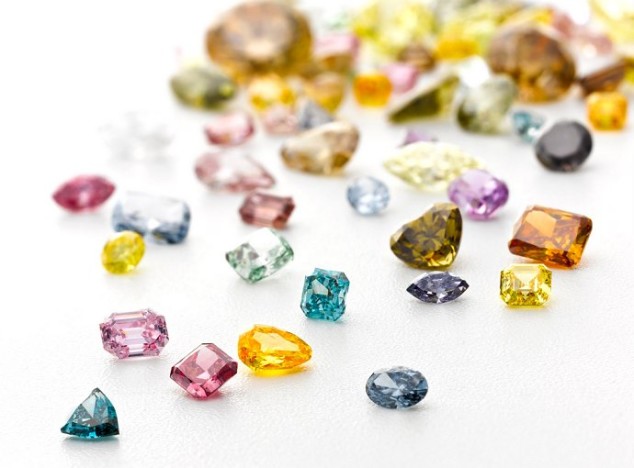
Did you know that diamonds aren’t limited to just the colorless variety? While the colorless diamond is the most common, the jewelry market has seen a marked increase in colorful diamonds. Colored gem stones allow you to give your jewelry an added flair. Since each color represents a different mood, you can pick and choose your daily jewelry selections according to the way you feel that morning. Since diamonds represent luxury and opulence, with the emergence of colors of diamonds it has become easier for the upper crust to customize their jewelry without having to settle for one of the lesser known stones on the market.

Rarity of Color Diamonds

Colored diamonds are incredibly rare. They actually only tend to appear once out of every 10,000 diamonds mined. This rarity is what lends the colored diamond its desirability and hefty price tag.

One of the most sought after colored diamonds is the blue diamond. Recently, a 29.6 carat blue diamond was found in the Cullinan mine near Pretoria in South Africa. Some of the larger blue diamonds have actually sold at a price of over $1 million a carat. Out of the 1 in every 10,000 diamonds that yield a colored diamond, blue diamonds are only found in only a fraction of those.

The rarest of all colorful diamonds, though, is the red diamond. There are probably only 20 red diamonds in all of existence. In this case, if you have your heart set on a red stone, you may want to stick with rubies or garnets. Depending on how deep your pockets go, red diamonds may be out of your price range.

Available Colors

There are several different colors available when picking out your diamond, although you might be surprised to learn what actually causes each one.

Nitrogen is one of the most common elements found in diamonds and has the ability to turn them yellow and brown. Brown diamonds have seen a sudden boost in popularity thanks to them being marketed as chocolate diamonds. Blue diamonds are created when boron is introduced to the gems while green diamonds are created by irradiation by alpha particles. Plastic deformation is also responsible for turning diamonds brown, pink, and red. The popular black diamond isn’t actually black. Instead it is just full of dark inclusions that give it the appearance of being black.

The truth is, even though colorful diamonds are incredibly expensive because of their rarity, the reason they have their colors is due to impurities and defects. This is probably the only time a defect will actually make you pay more for an item rather than less. No matter how they got that way, fancy color diamonds are a unique way to add a pop of color to your fine jewelry without having to sacrifice quality. Just be sure to have their quality verified before committing to a purchase. You wouldn’t want to spend tens of thousands on a stone only to find out later that it was one of the lesser quality gems instead.


Diamond Insurance: Do You Need It?

diamon insurance

Everyone who owns a home has a homeowner’s insurance policy, and many people who rent property will have renter’s insurance. These policies are a means to protect them from loss in the event of theft or some type of disaster. While it is always a good idea to have these policies, they may not be enough to protect all of the valuables that you have, especially if you have some rather expensive diamonds. Owning diamonds can be a great investment, but you need to make sure you are able to protect that investment. Diamond insurance could be just what you need.


Different Types of Policies for Diamond Owners


Diamond insurance is generally a separate policy from the others that you have for your possessions, and it is specific just to your diamonds. However, it is also possible to have it added to your homeowner’s insurance. You can choose from replacement value policies, agreed value policies, and actual cash value policies. It is important to understand the distinction between them.


When you choose a replacement value policy, the insurance company will pay you a predetermined and agreed upon amount if something were to happen to your diamond. An actual cash value policy will pay out the current market value of the diamond. The agreed value policies pay an amount agreed upon by you and the diamond insurance companies after the theft. This is rarer than the other types of policy.


Finding the Right Company for Diamond Insurance


When choosing a company for an added insurance policy for your diamonds, always make sure they specialize in these sorts of policies. Research the insurer to be sure they are legitimate and that they have good customer service. The last thing you need to do is have a long and drawn out ordeal when you are trying to replace your diamonds after a theft.


You Need Insurance for Your Diamonds


Your diamonds often have sentimental value attached to them as well as financial value. While the diamond insurance policies are not able to replace the actual gems and rings that you might lose, and they can’t replace the sentimental value, they can at lease help you with the financial loss. Having these policies in place and never needing them is far better than being caught unawares. If you own diamond jewelry, it really is in your best interest to start exploring the options available for diamond insurance.


What are Certified Diamonds? Want to know?

Certified Diamonds

Another term for a diamond certificate is the diamond report. These reports come from accredited gemological labs and they tell you about the diamond in question. In the report, they cover the 4Cs of diamonds – the color, cut, clarity, and carat. Today, the labs will use high-tech gear and equipment along with the expert eyes and experience of the gemologists to provide the most accurate diamond report possible. Anyone who buys a diamond, for whatever reason, should request a diamond report.

 Benefits of Buying Certified Diamond

Why should you buy certified diamonds? One of the biggest reasons is so that you can be sure you are getting a real diamond and that you are not paying too much for it. The report gives you a rundown of the diamond so you know exactly what it is you are buying. You can look at the report and know what the diamond will look like even without seeing it. In addition, certified diamonds tend to be able to hold their value better than those that do not have certification. By looking at the diamond reports, it makes it possible for non-experts to understand what they are looking at when they are examining a diamond. They can also use the reports to compare several different diamonds and know which one is the best. Since most people buying diamonds are not experts, the certificates serve as shorthand for understanding the diamond. Of course when buying, it is important to make sure that the certification comes from a high quality, accredited laboratory that has a good reputation when it comes to certification.

The Difference Between Diamond Reports and Appraisals

Many people do not realize there is a difference between appraisals and diamond reports, but the difference is actually huge. The report, as mentioned, covers the color, cut, clarity, and carat of the diamond in terms that the readers of the report can easily understand. The appraisal on the other hand is an actual valuation of the diamond from an expert. People will often need to get an appraisal if they want to insure their diamonds, which is always a good idea. The next time you are shopping for a diamond, make sure you ask for the diamond certificate so you can give it the once over for your own safety. It will help ensure you are making the right decision when you spend your money.